Most of us grew up hearing that the Grand Canyon was slowly carved by the Colorado River over millions of years. Park signs and schoolbooks repeat the idea like gospel: a little water, over a lot of time shaped this enormous canyon.
But what if the opposite is true? What if a lot of water over a much shorter amount of time carved out the Grand Canyon and its even larger cousin in México, Copper Canyon.
What if it took not millions of years ago for them to form, but these massive canyons were carved out in just a few days, months, or a couple years?
And what if this happened only a few thousand years ago during the global flood described in the Bible?
Let’s take a fresh look at the evidence.
A Canyon Formed in Just One Day

It sounds unbelievable that something as massive as the Grand Canyon could form quickly. But in 1980, the eruption of Mount St. Helens proved it’s possible.
A sudden mudflow after the eruption carved out a 140-foot-deep canyon in just a few hours. The landscape left behind had steep canyon walls, side channels, and layered sediments—features we usually associate with “millions of years” of erosion.
But this actually happened in one day. This recent event taught geologists something important. Given the right conditions, with lots of water moving incredibly fast—canyons can form rapidly, not slowly.
Note: Mount St. Helens was not carved by lava or molten rock. It was formed by a massive flow of water and mud — technically called a lahar (a volcanic mudflow).
A Rapid & Massive Flow of Water in Texas
Sadly, look at what just happened in the hill country of Texas as the Guadalupe River rose 26 feet in 45 minutes to devastate most of the structures near to its banks. Again, it was an incredibly massive amount of water moving super fast that caused the damage and erosion in less than an hour.
Water is a two-edged sword – life-giving in most cases, but under the right conditions, it becomes brutally destructive and terrain-altering.
Bent Rocks That Shouldn’t Be Bent

Now look at the Grand Canyon’s rock layers. Some of them are bent smoothly, like soft clay, without cracking. That’s a problem for the “millions of years” theory. Hardened rock doesn’t bend like that—it breaks.
Geologists explain this by saying the layers were laid down rapidly, one after another during the Flood, and were still soft when they were bent by tectonic uplift. Mainstream geology can’t easily explain the lack of fracturing in these rocks.
As Dr. Andrew Snelling of the Institute for Creation Research puts it:
“The physical evidence matches what we’d expect from a recent global catastrophe – not slow, uniform erosion over eons.”
Copper Canyon in Chihuahua, Mexico

Did you know that Copper Canyon in northern México is even larger in area than the Grand Canyon?
While the Grand Canyon is just one canyon covering about 1,900 square miles, Copper Canyon is a region in Chihuahua, México containing a series of many V-shaped canyons next to one another which covers over 25,000 square miles.
Yes, the Grand Canyon is huge but the canyonland region in México is more than 13 times larger than Arizona’s big canyon. To add to that – some of Chihuahua’s canyons are actually deeper than the deepest section of The Grand.
Mainstream geologists claim these canyons were carved slowly by rivers as a volcanic plateau rose over tens of millions of years. But the Flood model tells a simpler, more powerful story.
As the global waters receded, they rushed off the land with incredible force—slicing through mountains with immense power and cutting massive channels in what had been fresh, soft layers of sediment.
Just like the Grand Canyon, Copper Canyon’s size and shape make more sense when seen as a flood-carved system, not the product of slow trickling streams.
Where Did the Billions of Years Come From?

If this flood explanation makes so much sense, why don’t we hear it more often?
It has to do with worldview. In the early 1800s, a geologist named Charles Lyell promoted the idea that Earth was shaped by slow processes over vast ages. He openly said he wanted to “free science from Moses”- in other words, remove the Bible from geology.
Lyell’s ideas gave Charles Darwin the time he needed for evolution to seem possible. From there, the idea of “millions of years” became the scientific default. Not because of overwhelming evidence, but because it fit a narrative that leaves God out.
However, when you look at real-world evidence—from bent rocks to massive canyon systems—the idea of a young Earth shaped by catastrophic flooding is actually a better fit.
So What Does the Bible Say?

Genesis 6–9 tells the story of a global flood sent by God to judge a world filled with violence and corruption. The Bible says the water covered all the high mountains under the entire heavens (Genesis 7:19). After the waters prevailed for 150 days, they began to recede—rapidly carving channels, valleys, and canyons as they flowed back into the seas.
The rock layers we see today—full of marine fossils, bent strata, and immense erosion—fit that description perfectly.
As geomorphologist Dr. Ron Neller noted:
“Fossils are a record of death and catastrophic burial. These are exactly what we’d expect from Noah’s Flood.”
Not Billions of Years Old – But a Flood Record from 4,500 Years Ago

The canyons of the world – including the Grand Canyon in Arizona and “Copper Canyon” in Chihuahua are not only awesome to witness, they are also chocked-full of evidence as to how they were formed.
Evidence that something incredibly powerful happened here. Something that did not take millions of years to form.
They remind us that a real event described in the Bible—the global Flood about 4,500 years ago—left a visible, lasting mark on the Earth.
And once you understand what you are seeing, you can’t unsee it.
Go View these Canyons for Yourself – Through New Eyes
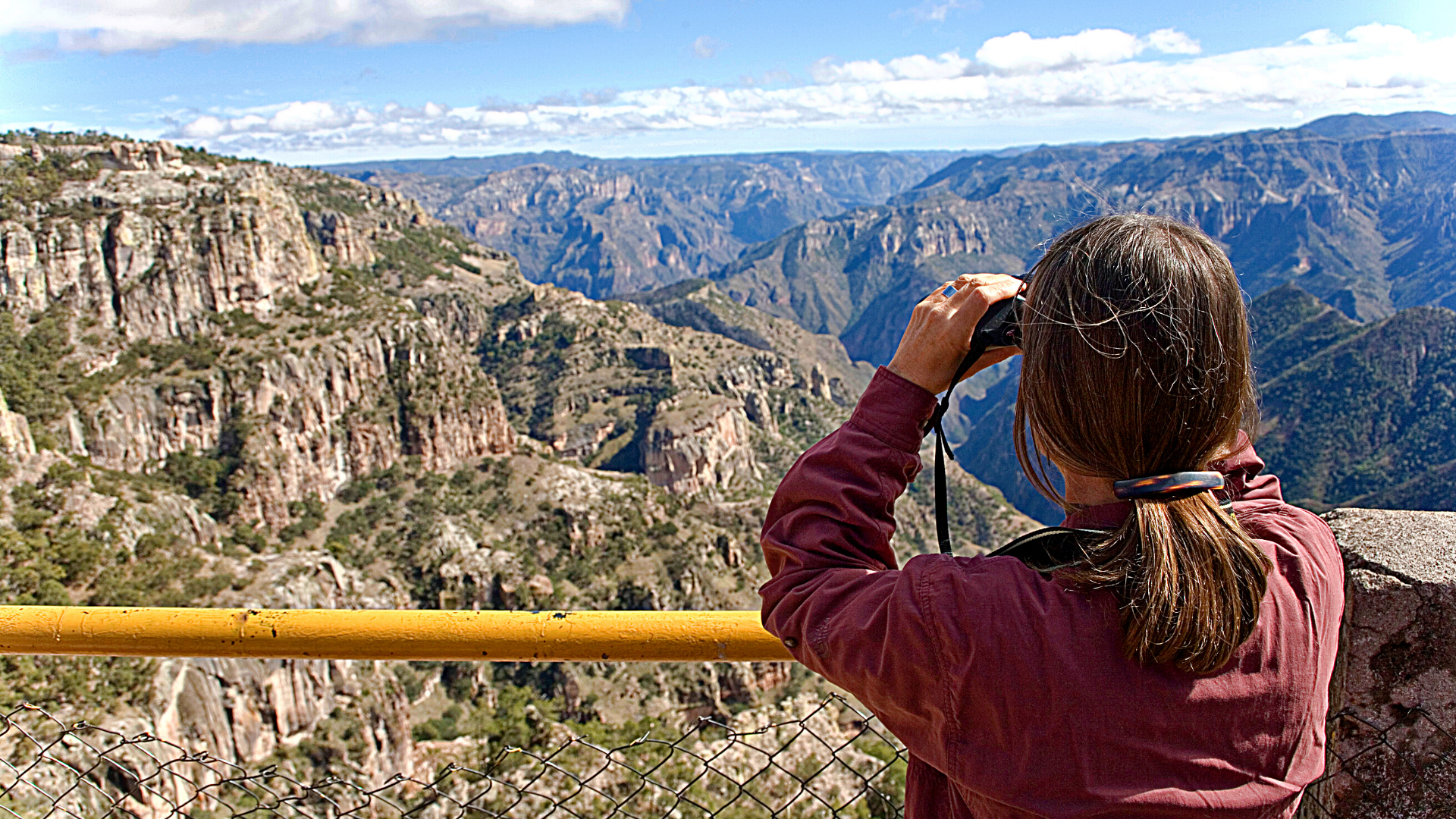
If you’ve never been to the Grand Canyon or Copper Canyon, I highly encourage you to go. Viewing either of these canyons will leave you in a state of awe.
As you stare at the layers upon layers of rock and sediment, don’t imagine what you are seeing as a very slow erosion process that took millions of years to create.
Instead, imagine how what you see in front of you was ruthlessly shaped from the earth violently splitting open as the “fountains of the great deep” burst forth, unleashing towering jets of superheated water and triggering massive volcanic eruptions, savage earthquakes, and destructive tsunamis throughout the world!
At the same time, torrential rain pounded and kept pounding and pounding for days and days on end. It was relentless!
This massive amount of water combined with the molten rock and mud surged across the land, violently ripping apart forests, drowning entire regions, and burying creatures under rapidly forming layers of sediment.
With this new perspective, you can appreciate these canyons not just as wonders of nature—but as testimonies of God’s supreme power, judgment, and mercy.
I invite you to go stand at the edge of these extraordinary and inspiring formations – and see with fresh eyes what massive amounts of water and cataclysmic upheaval from within the earth can create in just a very short period of time.
If you have an interest in researching this yourself, here are 2 informational videos you can find on YouTube about this subject.
The Grand Canyon: Monument to the Flood AiG

About the Author
Mike Vondruska is the founder and director of tour operations for Go Now Adventures LLC. He and his team specialize in creating expert-guided small group multi-day tours for curious and adventurous travelers to explore the country of Mexico.
Mike’s tour company is registered in the United States and also has an office near the city of Pachuca in the Mexico state of Hidalgo. His company website is MexicoVacationTours.com